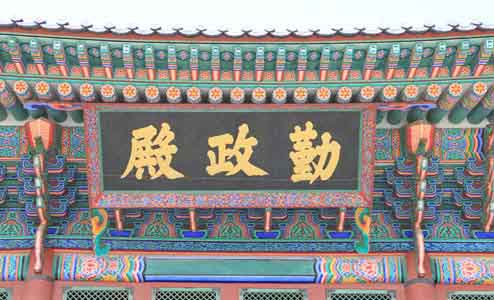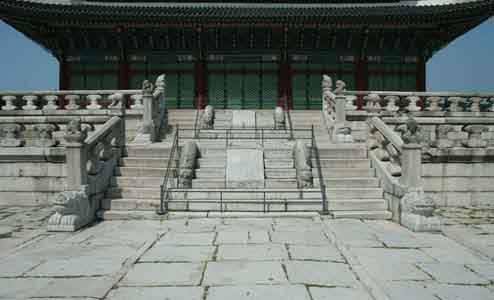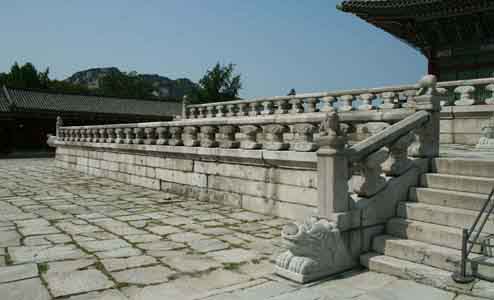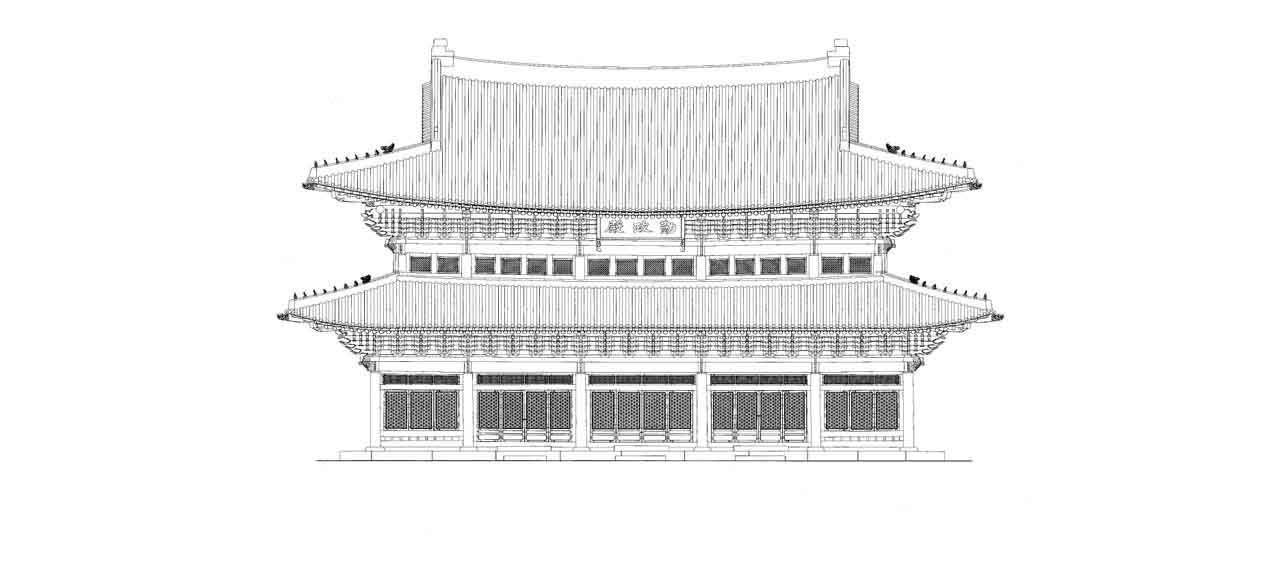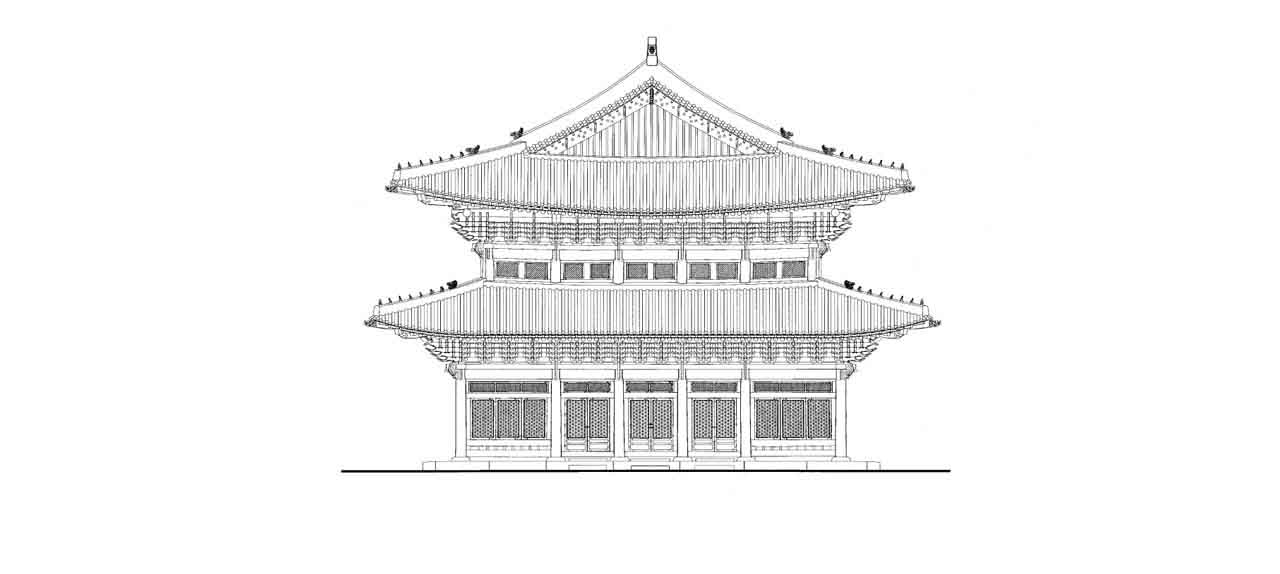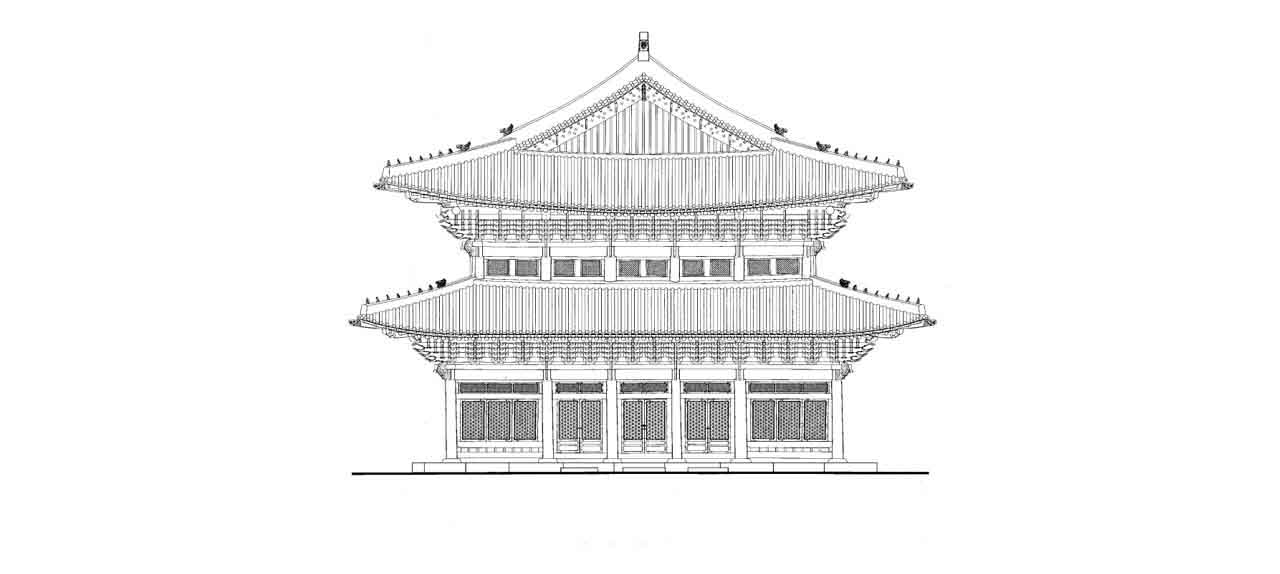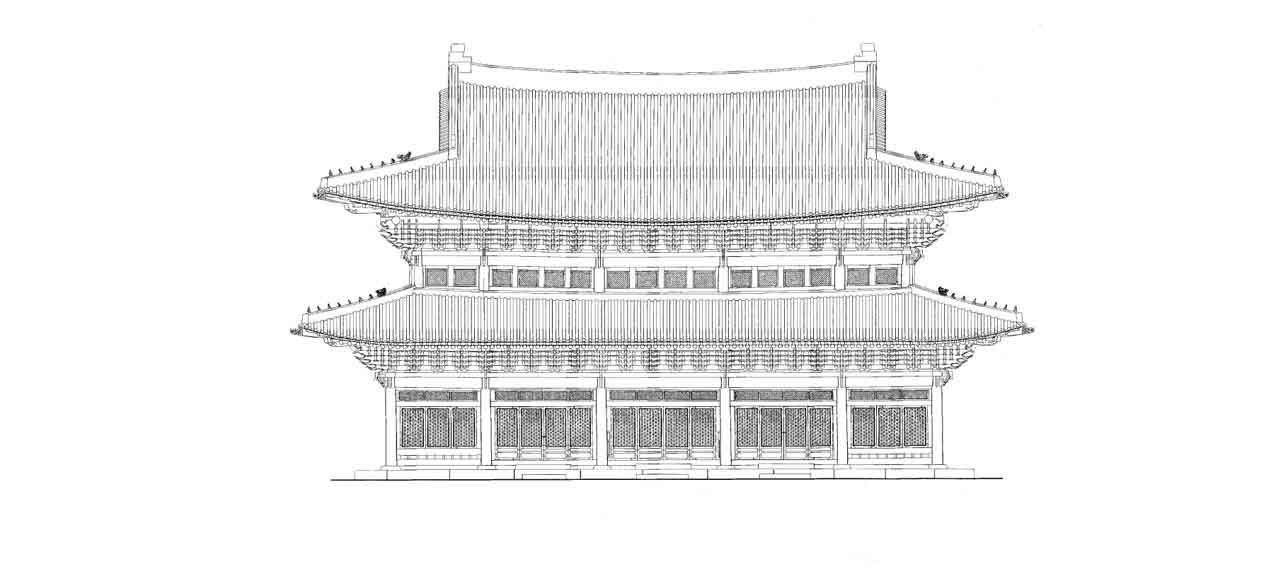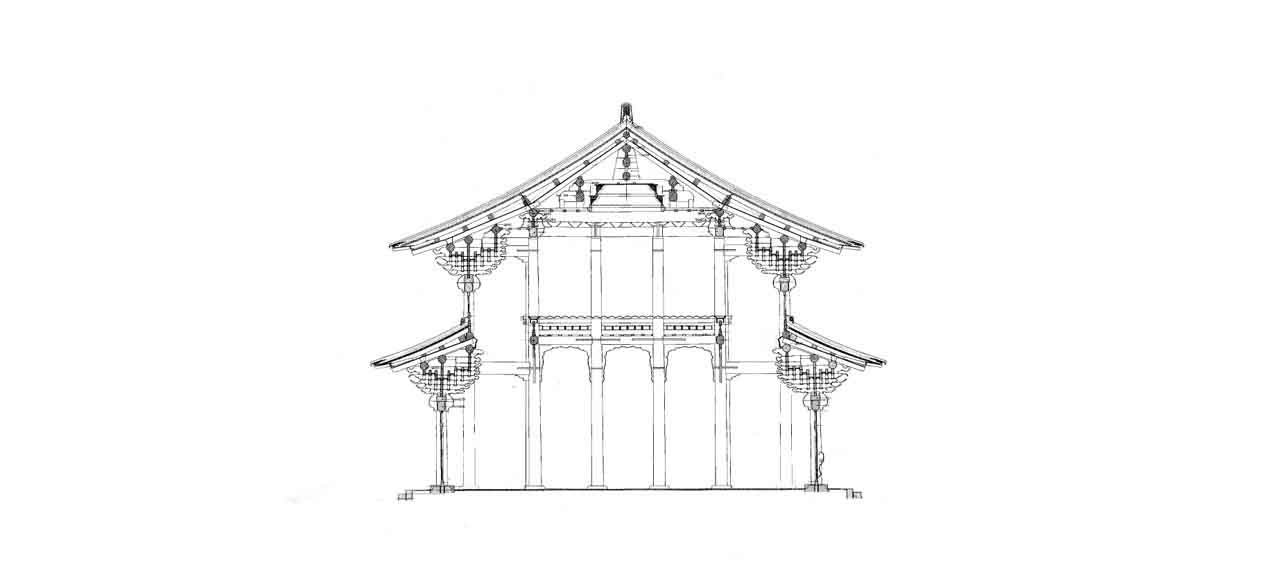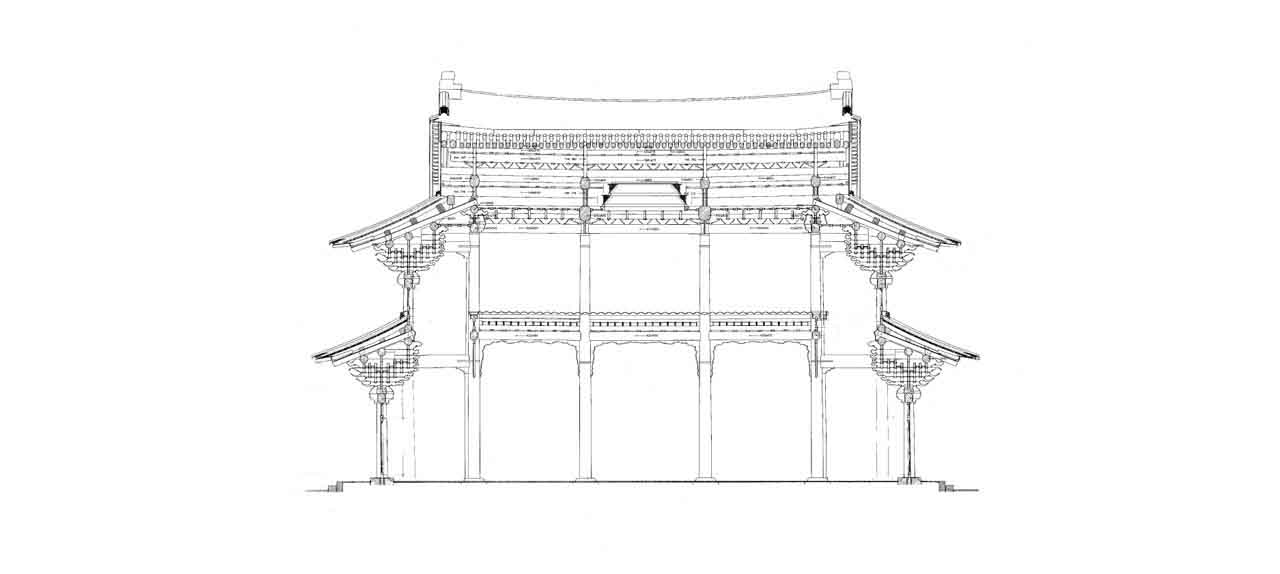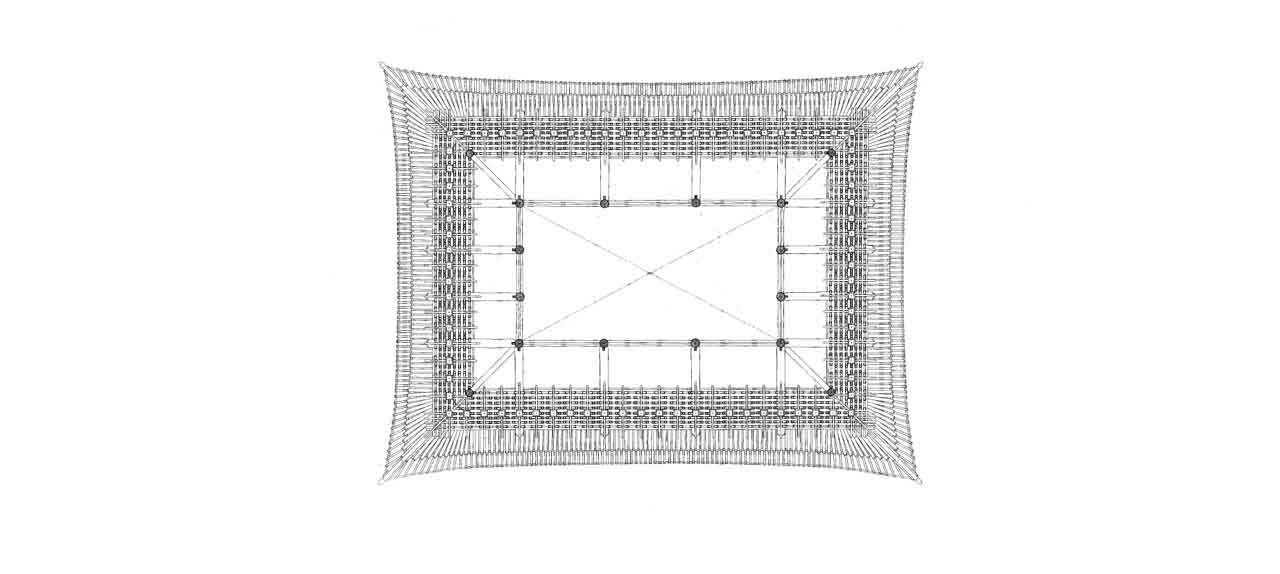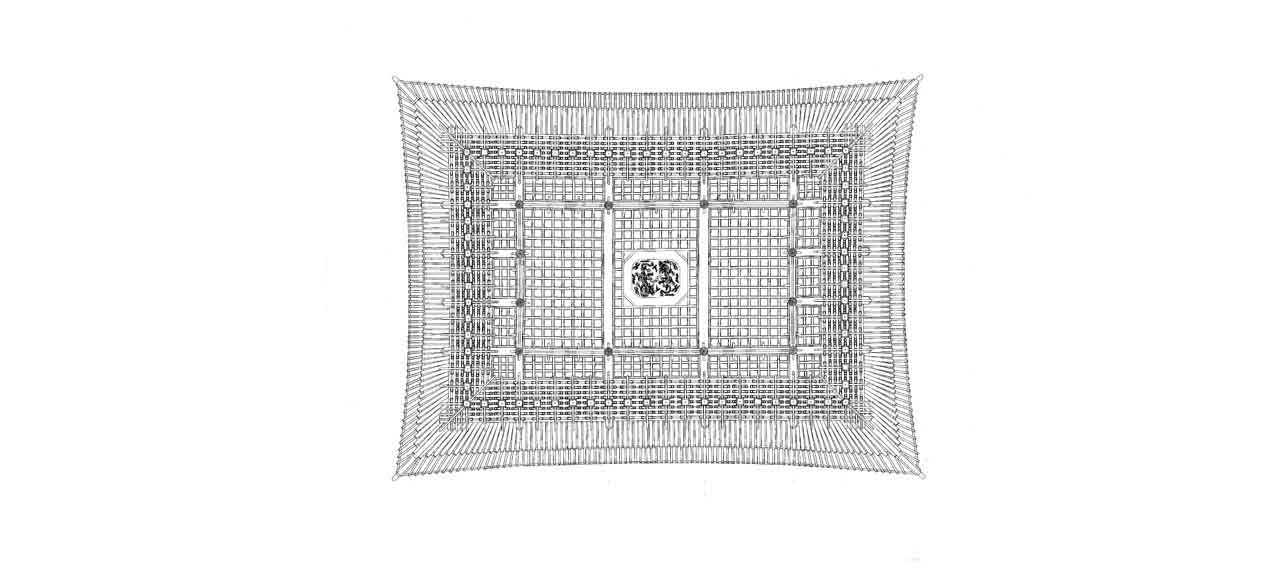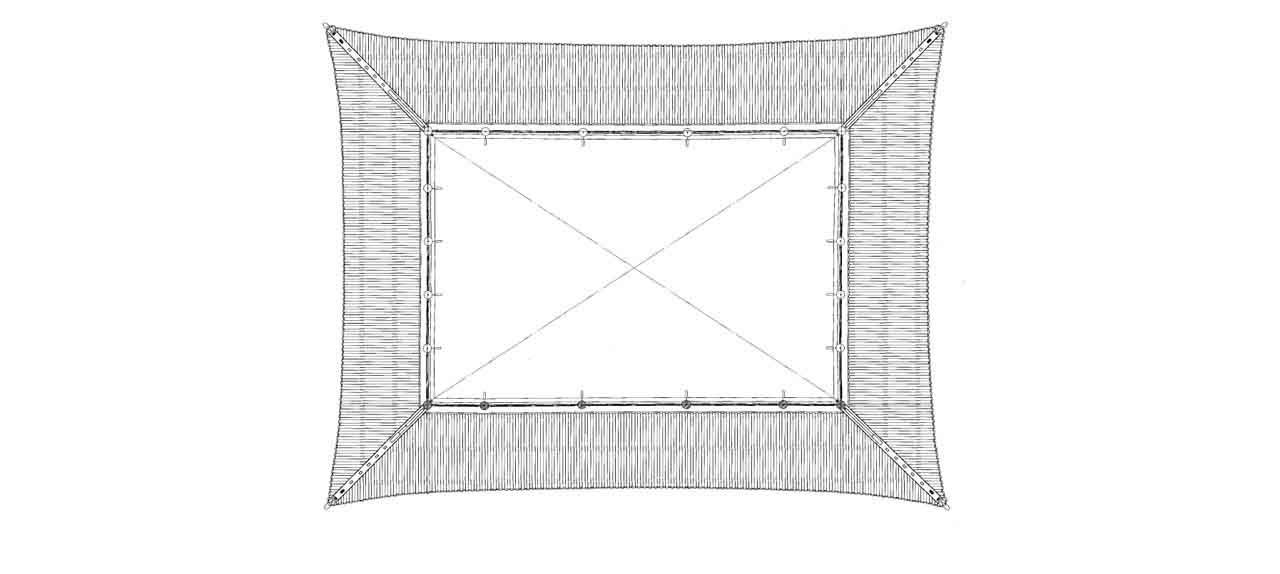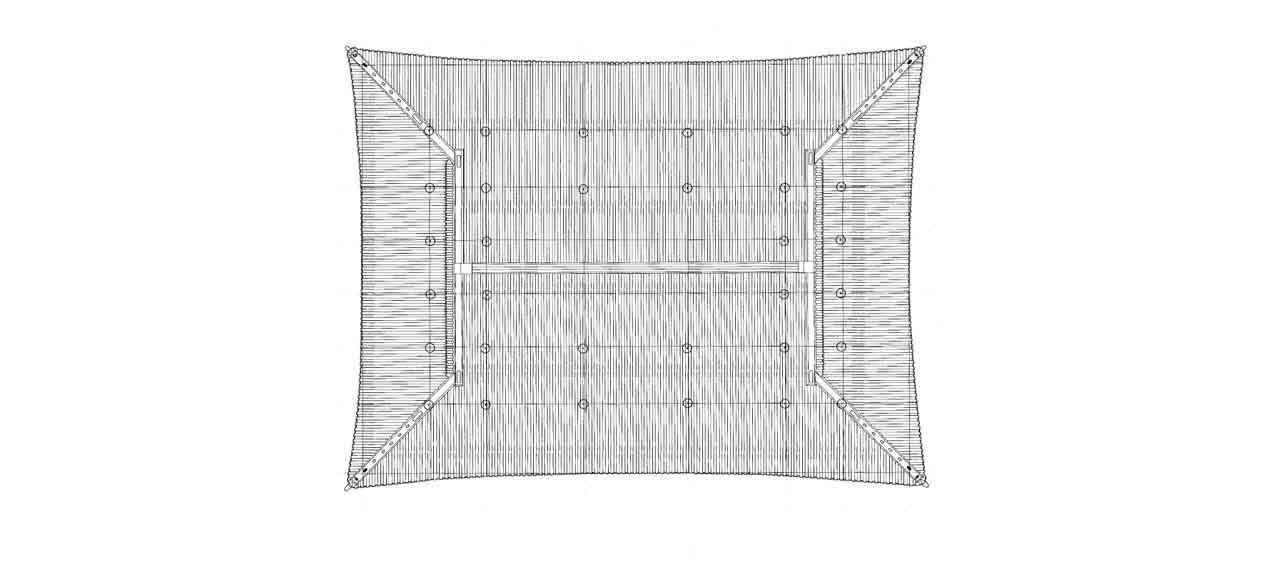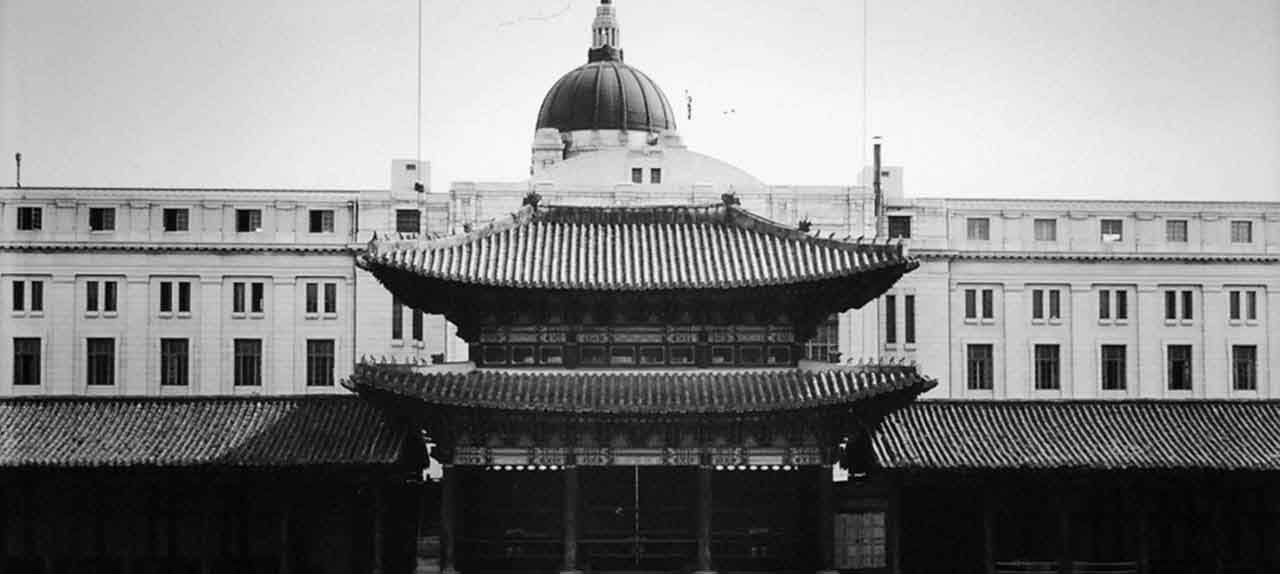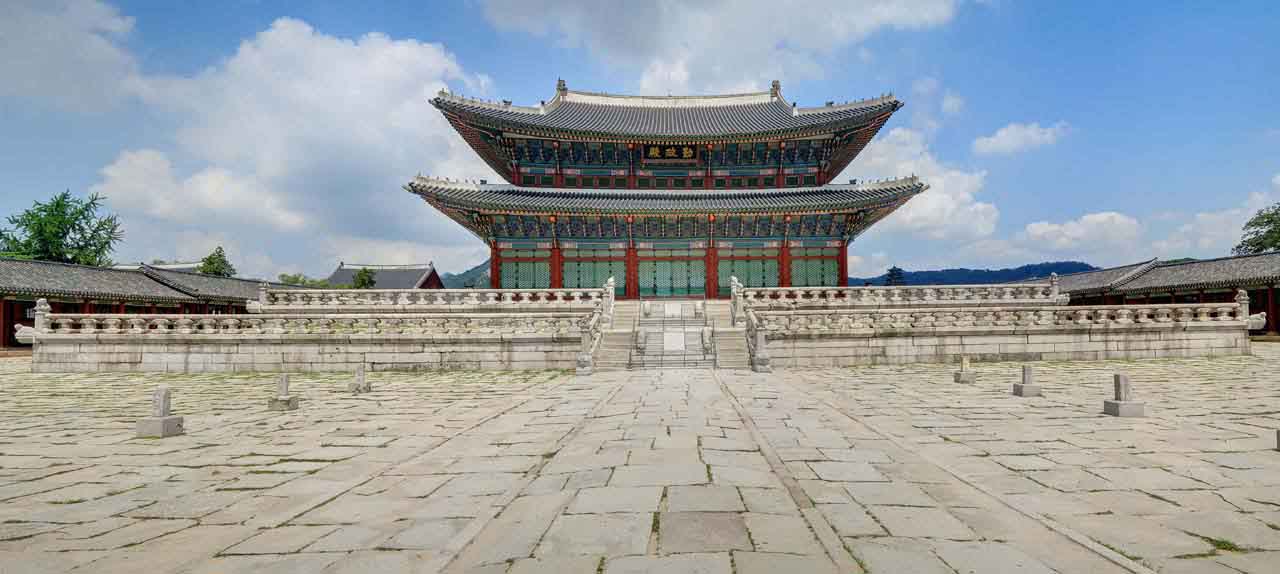
The center of Gyeongbokgung, Geunjeongjeon. From outside it looks like two stories, but looking inside, it is one story. Joseon architecture is different from outside and inside.
Two dragons are hung from the ceiling. Seven claws each. The four-clawed dragon (sa-jo-ryong) was the symbol of Joseon's kings, and the five-clawed dragon (o-jo-ryong) could only be used by the Chinese emperor. Yet in 1867, when Heungseon Daewongun reconstructed Gyeongbokgung, he hung a seven-clawed dragon from the ceiling of Geunjeongjeon. It was a declaration to the heavens of Joseon's independence and pride.
Behind the throne, the Ilwol-Obongdo folding screen spreads out — sun and moon, five peaks, pine tree, waterfall, waves. This screen symbolizes the place where the king sits. Behind the throne, this screen was always spread. In the center of the screen, you can see there is a door. When the king came to Geunjeongjeon, he entered through the back door and opened the door of this screen to come out.
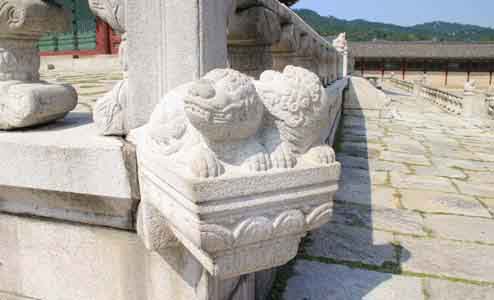
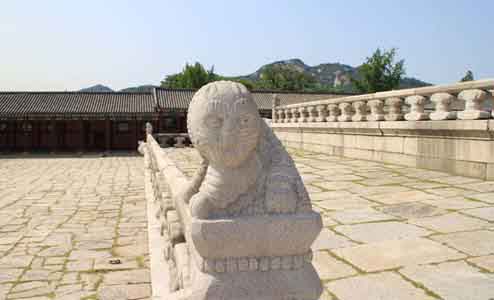
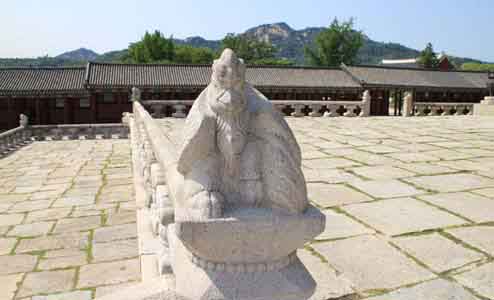
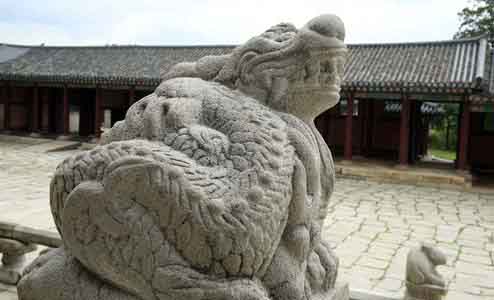
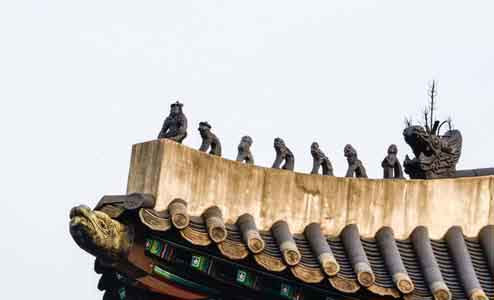
On the platform of Geunjeongjeon sit thirty-six animal sculptures. They serve as guards to prevent evil energy from approaching the king's space. On the roof sit the samjang (three patriarchs) and Son Oh-gong's party as japsang (decorative roof figures). All of them are in pairs. It means yin and yang are in harmony and descendants will flourish.
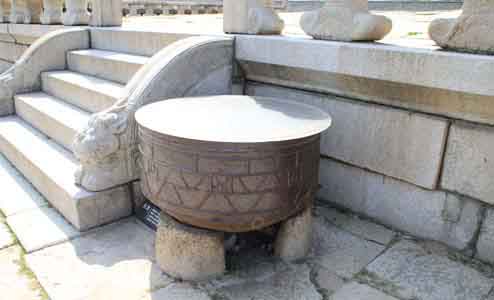
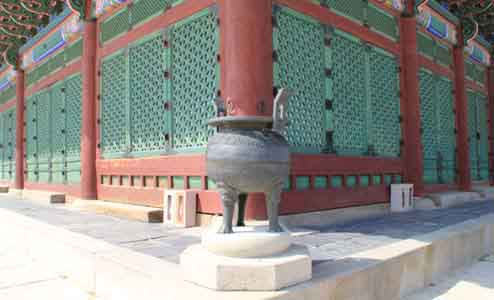
On the platform are iron bowls called deum. They always held water. There is a reason. Long ago, a fire demon lived on Namsan mountain, and its face was very hideous. Once, the fire demon came to Gyeongbokgung to start a fire, but saw its own face reflected in the deum and was so surprised it ran away in terror. Wooden buildings are helpless against fire. So deum were placed with the meaning of preventing fire.
Standing in the courtyard of Geunjeongjeon today and looking up at the platform, thirty-six guardian sculptures, the seven-clawed dragon, and the deum come into view all at once. Joseon's pride is piled up in layers at this place.
Behind Geunjeongjeon is Sajeongjeon, the king's workplace.
Two dragons are hung from the ceiling. Seven claws each. The four-clawed dragon (sa-jo-ryong) was the symbol of Joseon's kings, and the five-clawed dragon (o-jo-ryong) could only be used by the Chinese emperor. Yet in 1867, when Heungseon Daewongun reconstructed Gyeongbokgung, he hung a seven-clawed dragon from the ceiling of Geunjeongjeon. It was a declaration to the heavens of Joseon's independence and pride.
Behind the throne, the Ilwol-Obongdo folding screen spreads out — sun and moon, five peaks, pine tree, waterfall, waves. This screen symbolizes the place where the king sits. Behind the throne, this screen was always spread. In the center of the screen, you can see there is a door. When the king came to Geunjeongjeon, he entered through the back door and opened the door of this screen to come out.
On the platform of Geunjeongjeon sit thirty-six animal sculptures. They serve as guards to prevent evil energy from approaching the king's space. On the roof sit the samjang (three patriarchs) and Son Oh-gong's party as japsang (decorative roof figures). All of them are in pairs. It means yin and yang are in harmony and descendants will flourish.
On the platform are iron bowls called deum. They always held water. There is a reason. Long ago, a fire demon lived on Namsan mountain, and its face was very hideous. Once, the fire demon came to Gyeongbokgung to start a fire, but saw its own face reflected in the deum and was so surprised it ran away in terror. Wooden buildings are helpless against fire. So deum were placed with the meaning of preventing fire.
Standing in the courtyard of Geunjeongjeon today and looking up at the platform, thirty-six guardian sculptures, the seven-clawed dragon, and the deum come into view all at once. Joseon's pride is piled up in layers at this place.
Behind Geunjeongjeon is Sajeongjeon, the king's workplace.
Audio Guide
Geunjeongjeon Hall
Loading...
0:00 / 0:00
No audio yet
Photo Gallery