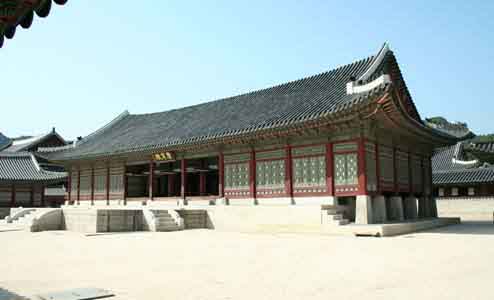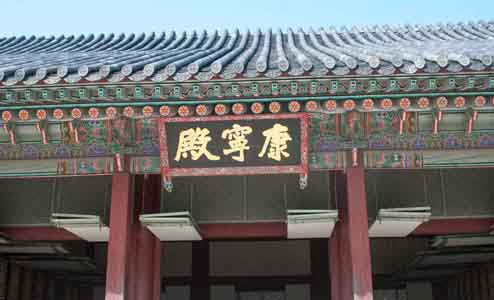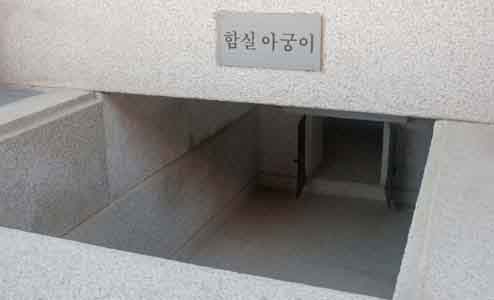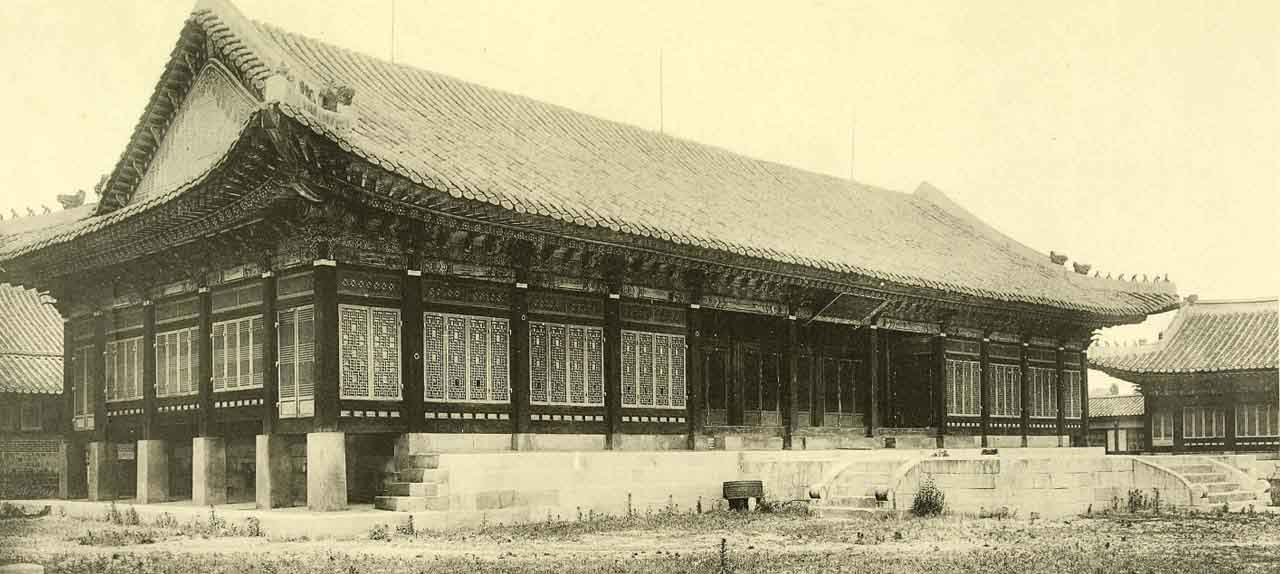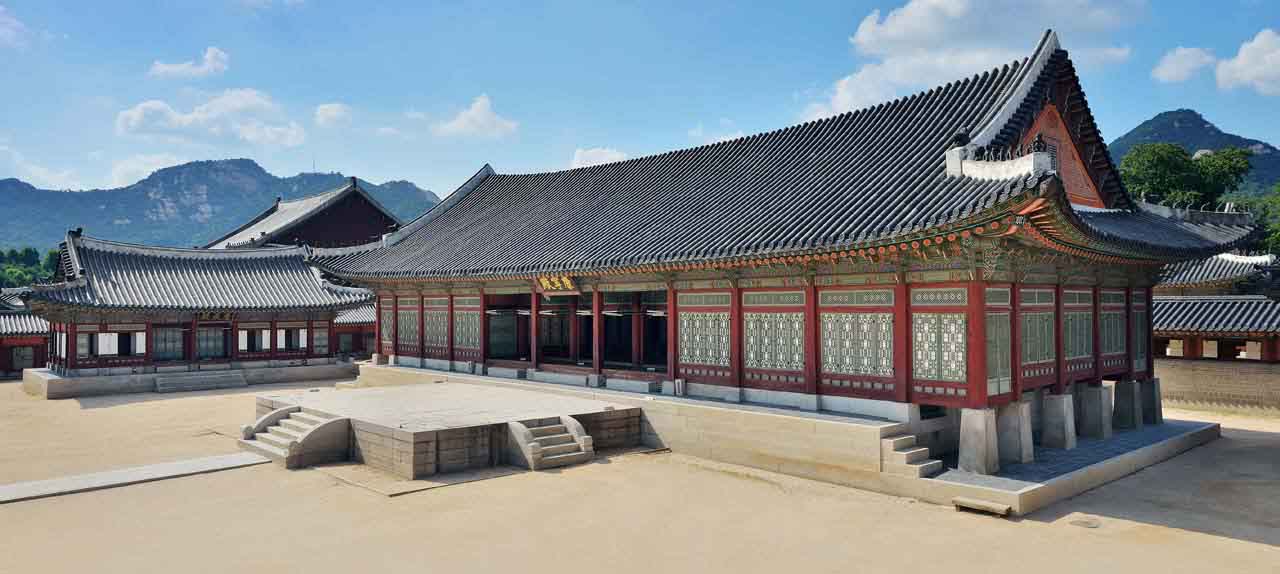
This is Gangnyeongjeon, the king’s private quarters. Council Hall was a place for taking care of matters of state; this is where the king would rest. The queen did not live with the king here. According to Neo-confucian doctrine, there were separate living quarters for husband and wife in the royal family, as well as upper-class families. Of course there were cases in European royalty where husband and wife used separate bedrooms, but what makes the Joseon custom unique is that the couple lived in different buildings altogether.
The king’s room is very sparse and simple. It was meant as a sign of the king’s frugality – it also served as an example for his people.
For a Joseon king, the day began at dawn. After waking up, he would visit the palace elders for morning greetings and then head to Council Hall to take care of matters of state. It was only after the meeting that he would have breakfast. He would then receive reports from the lower officials and then go into a morning study session. This was a time for the king to discuss Confucian texts and history with his officials. This type of study was done three times per day, in the morning, afternoon and evening. One tyrant who did not like study abolished these study sessions entirely. In the afternoon the king met with officials from the provinces and heard what they had to say, or he might visit foreign dignitaries. He would also have to read countless letters sent by literati and officials from all over the country. These letters usually made policy suggestions or criticized a current policy; there were a lot of them to read, but they were a good source for making a policy. After a long day of work, the king would go to sleep here. Of course, there were days that he would visit the quarters of the queen or a consort. But he could not simply visit the queen or a consort whenever he wished. Court astrologers would analyze the king’s gi, a kind of cosmic energy, for the day, as well as the gi of the sky, and then indicate who he could visit that night. When he slept in Gangnyeongjeon, eight court ladies would stand a night shift. Because they always had so much work to do, it is said that Joseon kings often suffered from eye problems, skin diseases and other ailments.
The king’s room is very sparse and simple. It was meant as a sign of the king’s frugality – it also served as an example for his people.
For a Joseon king, the day began at dawn. After waking up, he would visit the palace elders for morning greetings and then head to Council Hall to take care of matters of state. It was only after the meeting that he would have breakfast. He would then receive reports from the lower officials and then go into a morning study session. This was a time for the king to discuss Confucian texts and history with his officials. This type of study was done three times per day, in the morning, afternoon and evening. One tyrant who did not like study abolished these study sessions entirely. In the afternoon the king met with officials from the provinces and heard what they had to say, or he might visit foreign dignitaries. He would also have to read countless letters sent by literati and officials from all over the country. These letters usually made policy suggestions or criticized a current policy; there were a lot of them to read, but they were a good source for making a policy. After a long day of work, the king would go to sleep here. Of course, there were days that he would visit the quarters of the queen or a consort. But he could not simply visit the queen or a consort whenever he wished. Court astrologers would analyze the king’s gi, a kind of cosmic energy, for the day, as well as the gi of the sky, and then indicate who he could visit that night. When he slept in Gangnyeongjeon, eight court ladies would stand a night shift. Because they always had so much work to do, it is said that Joseon kings often suffered from eye problems, skin diseases and other ailments.
Audio Guide
Gangnyeongjeon Hall
Loading...
0:00 / 0:00
No audio yet
Photo Gallery