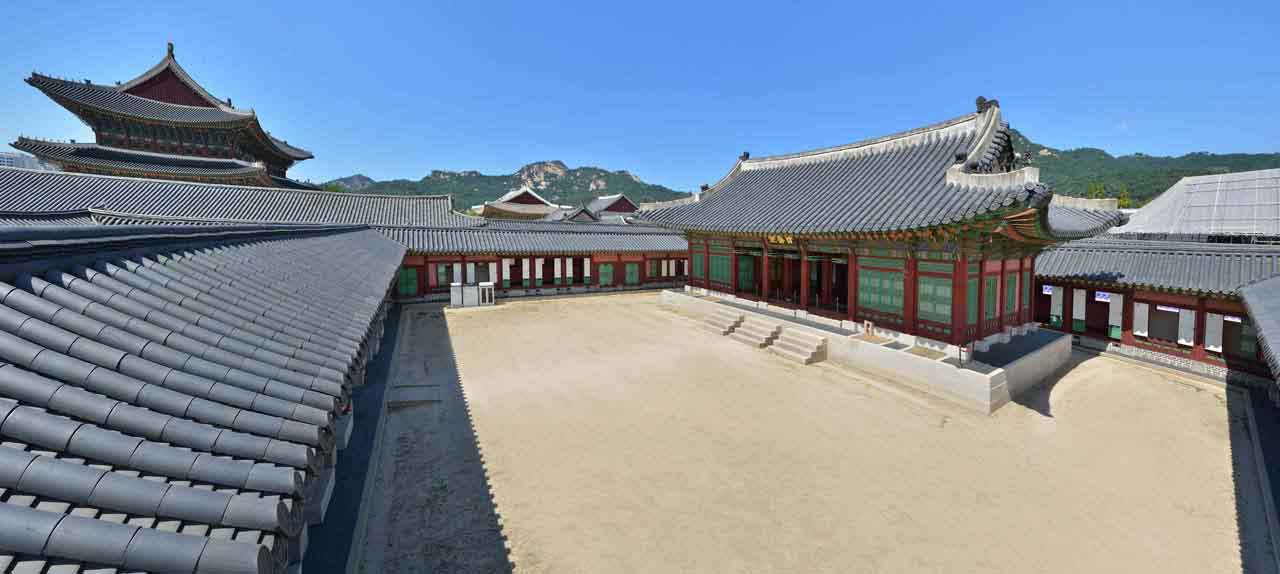
This is Jaseondang and Bihyeongak, the place where the Crown Prince lives and studies. It is also commonly called “the east palace.”
East Asian people believe that the east symbolizes spring. The Crown Prince, as the future king, symbolized spring, as well as hope. This is why the quarters for the Crown Prince were built in the eastern part of the palace and called “the east palace.”
In Joseon, when the eldest son of the queen reached the age of ten, he was designated the Crown Prince. But if the queen had no son, sometimes a consort’s son was chosen to be the Crown Prince.
After being crowned, the Crown Prince was no longer considered to be a child. He left the care of his mother and moved into the East Palace.
His new life as the future leader of Joseon began, and the best scholars in the land began the process of properly educating the Crown Prince.
He had to study subjects as history and the classic Confucian texts, as well as music, horseback riding and archery. There were various types of exams as well: exams taken everyday, exams taken once every five days, exams taken once every fifteen days, and so on. Not all Crown Princes were astute students. Annals of the Joseon Dynasty records from 1405 state that the eunuch in charge of the Crown Prince was flogged because the Crown Prince had begun to neglect his studies.
In the beginning of the 20th century, Joseon became a colony of Japan.
At that time, the Japanese desecrated Gyeongbokgung. The building was gutted and sold to a Japanese individual. Even this was lost during the major earthquake in Japan; only the foundation blocks remain today. After a long struggle, the palace construction material was returned in 1995 and in 1999, the palace was fully rebuilt. The stone material and foundation is currently being preserved in a mountain behind Geoncheonggung.
East Asian people believe that the east symbolizes spring. The Crown Prince, as the future king, symbolized spring, as well as hope. This is why the quarters for the Crown Prince were built in the eastern part of the palace and called “the east palace.”
In Joseon, when the eldest son of the queen reached the age of ten, he was designated the Crown Prince. But if the queen had no son, sometimes a consort’s son was chosen to be the Crown Prince.
After being crowned, the Crown Prince was no longer considered to be a child. He left the care of his mother and moved into the East Palace.
His new life as the future leader of Joseon began, and the best scholars in the land began the process of properly educating the Crown Prince.
He had to study subjects as history and the classic Confucian texts, as well as music, horseback riding and archery. There were various types of exams as well: exams taken everyday, exams taken once every five days, exams taken once every fifteen days, and so on. Not all Crown Princes were astute students. Annals of the Joseon Dynasty records from 1405 state that the eunuch in charge of the Crown Prince was flogged because the Crown Prince had begun to neglect his studies.
In the beginning of the 20th century, Joseon became a colony of Japan.
At that time, the Japanese desecrated Gyeongbokgung. The building was gutted and sold to a Japanese individual. Even this was lost during the major earthquake in Japan; only the foundation blocks remain today. After a long struggle, the palace construction material was returned in 1995 and in 1999, the palace was fully rebuilt. The stone material and foundation is currently being preserved in a mountain behind Geoncheonggung.
Audio Guide
The East Palace (Jaseondang, Bihyeongak)
Loading...
0:00 / 0:00
No audio yet