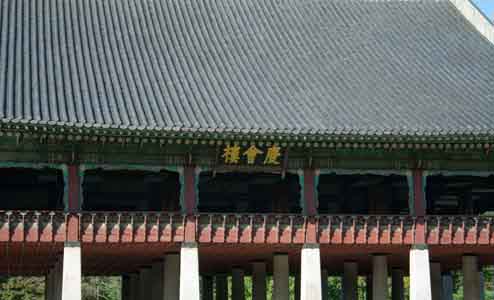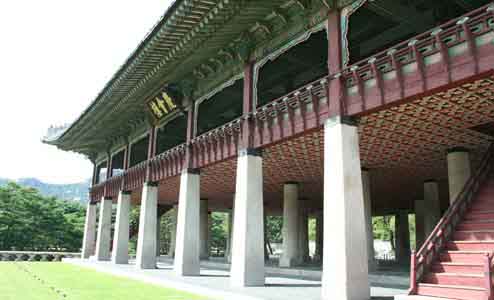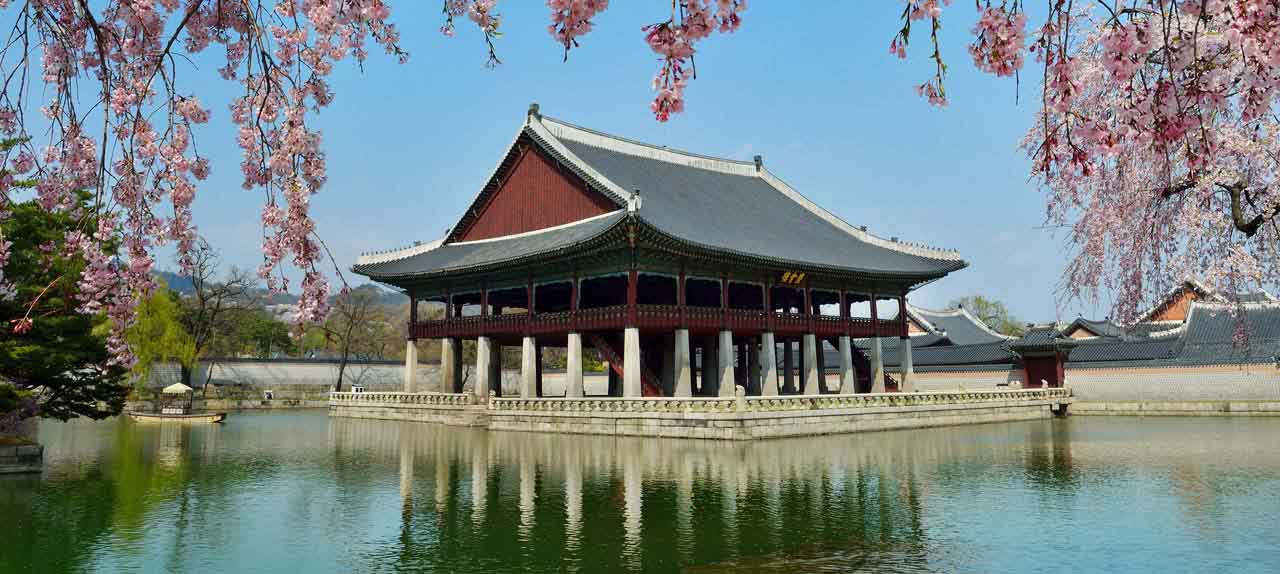
Gyeonghoeru is the largest pavilion in Joseon. But the appearance you see now is much more subdued than before. Originally, it is said that each stone pillar had writhing dragons carved on it. It was much more splendid.
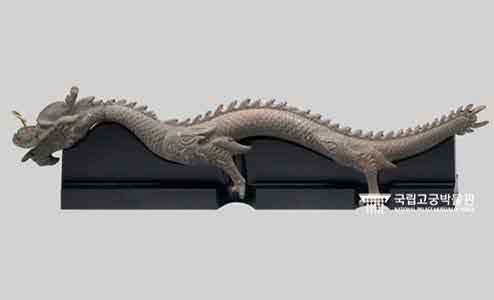
It burned down during the Imjin War, and was rebuilt 270-some years later, during the reign of King Gojong. At that time, records say that two bronze dragons were placed in the pond with the meaning of protecting Gyeonghoeru from fire. In 1997, during construction work on the Gyeonghoeru pond, all the water was drained and bronze dragons actually came out. The discovered dragons are currently on display at the National Palace Museum.
If you look closely at the pillars, you can see dents here and there. These are traces of bullets from the Korean War. On both sides of the small bridge leading to Gyeonghoeru sit Bulgasari, which eat iron and protect Gyeongbokgung — but one of them has its nose damaged. Could it be that this one threw its body to block bomb fragments flying toward Gyeonghoeru?
This is where many splendid royal banquets were held. Banquets welcoming Chinese envoys were held here, and archery competitions and military examinations were held in front of Gyeonghoeru. When drought came, rain rituals were also held here.
Standing by the pond of Gyeonghoeru today and looking at the pavilion reflected on the water, on a day when the wind is calm, it is even mysterious. It feels as if the two bronze dragons still lie beneath the water.
To the north of Gyeonghoeru, take a step toward Hyangwonji Pond.
It burned down during the Imjin War, and was rebuilt 270-some years later, during the reign of King Gojong. At that time, records say that two bronze dragons were placed in the pond with the meaning of protecting Gyeonghoeru from fire. In 1997, during construction work on the Gyeonghoeru pond, all the water was drained and bronze dragons actually came out. The discovered dragons are currently on display at the National Palace Museum.
If you look closely at the pillars, you can see dents here and there. These are traces of bullets from the Korean War. On both sides of the small bridge leading to Gyeonghoeru sit Bulgasari, which eat iron and protect Gyeongbokgung — but one of them has its nose damaged. Could it be that this one threw its body to block bomb fragments flying toward Gyeonghoeru?
This is where many splendid royal banquets were held. Banquets welcoming Chinese envoys were held here, and archery competitions and military examinations were held in front of Gyeonghoeru. When drought came, rain rituals were also held here.
Standing by the pond of Gyeonghoeru today and looking at the pavilion reflected on the water, on a day when the wind is calm, it is even mysterious. It feels as if the two bronze dragons still lie beneath the water.
To the north of Gyeonghoeru, take a step toward Hyangwonji Pond.
Audio Guide
Gyeonghoeru Pavilion
Loading...
0:00 / 0:00
No audio yet
Photo Gallery