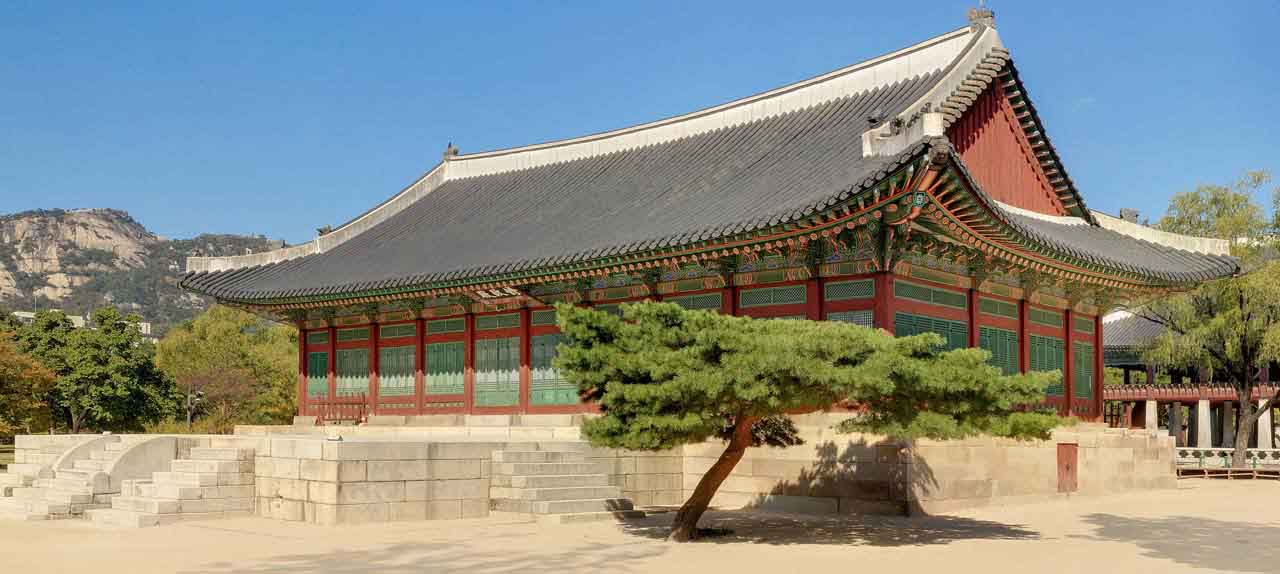
Standing in the courtyard of Sujeongjeon, you might almost hear the sound of Joseon's greatest minds gathering here 600 years ago. This is the site where Jiphyeonjeon (Hall of Worthies) stood during the reign of King Sejong — the hall that helped make Hangul practical after King Sejong created it.
Jiphyeonjeon was where Joseon's greatest minds gathered. King Sejong cherished the scholars of Jiphyeonjeon deeply. He had a library built so they could read precious books freely. Thanks to this, during King Sejong's era, Joseon developed in all fields — science, history, astronomy, music.
One of the most valuable activities of the Jiphyeonjeon scholars was compiling the Haerye (Explanations) of Hunminjeongeum after King Sejong created it, and actively assisting in publishing 'Yongbieocheonga' and 'Worin cheongang jigok,' which put Hunminjeongeum to practical use.
The building standing here is Sujeongjeon, not Jiphyeonjeon. When Gyeongbokgung was reconstructed during King Gojong's reign, the name was changed to Sujeongjeon. But what happened in this courtyard outlived the name. In 1446, the proclamation of Hunminjeongeum — some scholar here must have quietly rejoiced on that day.
Strolling slowly around Sujeongjeon today, the enthusiasm of the Jiphyeonjeon scholars seems to remain in every corner. To the north end of Gyeongbokgung, walk toward the site of Gwollaegaksa.
Jiphyeonjeon was where Joseon's greatest minds gathered. King Sejong cherished the scholars of Jiphyeonjeon deeply. He had a library built so they could read precious books freely. Thanks to this, during King Sejong's era, Joseon developed in all fields — science, history, astronomy, music.
One of the most valuable activities of the Jiphyeonjeon scholars was compiling the Haerye (Explanations) of Hunminjeongeum after King Sejong created it, and actively assisting in publishing 'Yongbieocheonga' and 'Worin cheongang jigok,' which put Hunminjeongeum to practical use.
The building standing here is Sujeongjeon, not Jiphyeonjeon. When Gyeongbokgung was reconstructed during King Gojong's reign, the name was changed to Sujeongjeon. But what happened in this courtyard outlived the name. In 1446, the proclamation of Hunminjeongeum — some scholar here must have quietly rejoiced on that day.
Strolling slowly around Sujeongjeon today, the enthusiasm of the Jiphyeonjeon scholars seems to remain in every corner. To the north end of Gyeongbokgung, walk toward the site of Gwollaegaksa.
Audio Guide
Sujeongjeon Hall
Loading...
0:00 / 0:00
No audio yet
Photo Gallery


