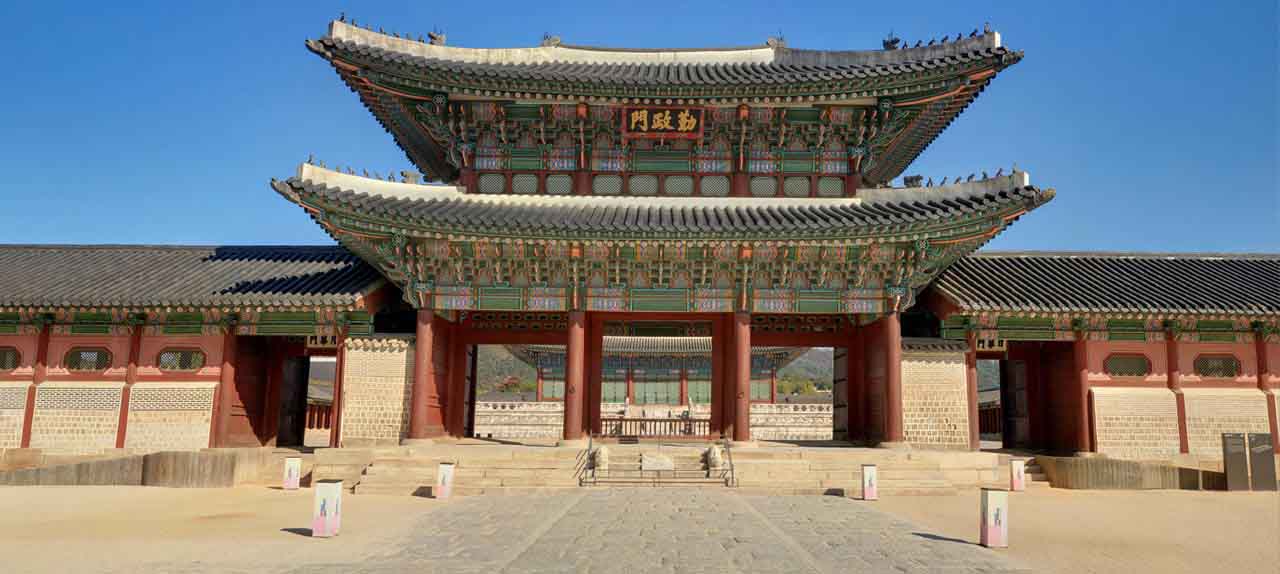
Look at the steps in front of Geunjeongmun. They are not steps. They are slanted stone plates that look uncomfortable to walk on. On a rainy or snowy day, it must have been even more difficult.
The king passed over this dapdo (royal path) in his palanquin. Carved on the dapdo is a pair of phoenixes. The phoenix is an imaginary bird said to appear only in times of peace. Every time Joseon's kings passed over this dapdo, they would have asked themselves in their hearts — 'has peace settled in this land I rule, enough for a phoenix to appear?'
'Geunjeong' means 'diligently engaging in politics.' The name was given by Jeong Do-jeon. The signboard was written by Shin Seok-hee (1808-1873) when Gyeongbokgung was reconstructed.
Standing in front of Geunjeongmun today, look up at the phoenix carved on the dapdo. A path not for walking feet but for a king in his palanquin. The phoenix carved on that path still waits for a time of peace.
Passing Geunjeongmun, finally Geunjeongjeon — the center of Joseon.
The king passed over this dapdo (royal path) in his palanquin. Carved on the dapdo is a pair of phoenixes. The phoenix is an imaginary bird said to appear only in times of peace. Every time Joseon's kings passed over this dapdo, they would have asked themselves in their hearts — 'has peace settled in this land I rule, enough for a phoenix to appear?'
'Geunjeong' means 'diligently engaging in politics.' The name was given by Jeong Do-jeon. The signboard was written by Shin Seok-hee (1808-1873) when Gyeongbokgung was reconstructed.
Standing in front of Geunjeongmun today, look up at the phoenix carved on the dapdo. A path not for walking feet but for a king in his palanquin. The phoenix carved on that path still waits for a time of peace.
Passing Geunjeongmun, finally Geunjeongjeon — the center of Joseon.
Audio Guide
Geunjeongmun Gate
Loading...
0:00 / 0:00
No audio yet
Photo Gallery


