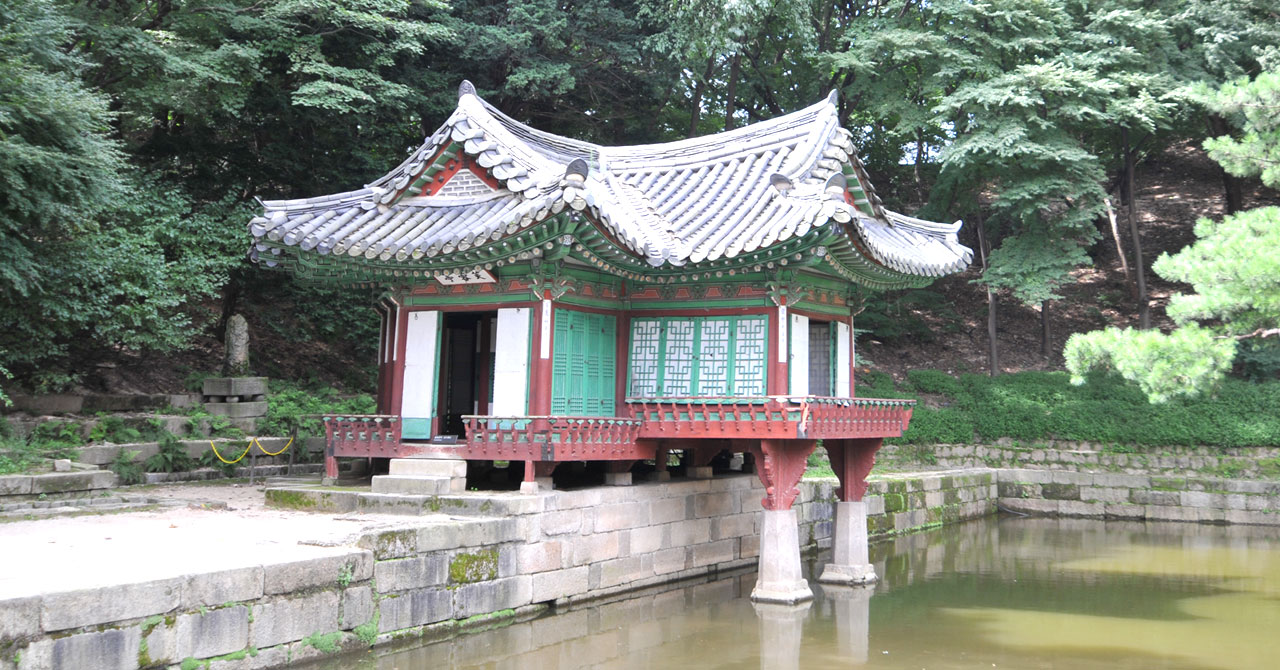
This is the Buyongji Pond. The round island inside the square pond represents the traditional world view of a round sky and square earth. Beautiful poetry is written on the pillars of the Buyongjeong Pavilion, of which two are stepping into the pond. The lotus scent of the Buyongji spreads like musk across miles, the clear form of the lotus represents the buddha's form, the wide leaves become the umbrella of wise men, and the rolling raindrops become prayer beads. Isn’t it an interesting thought, comparing the lotus leaves across the pond as parasols held by wise men? King Jeongjo loved the Buyongjeong the most. He was the one who gave it its name Buyongjeong, meaning widely open lotus. As a revolutionary, he had to face many dissidents and difficult problems. This was why he knew the value of rest. He would often come to this place with his close officials. He was talented with the bow, and hit the target 59 times out of 60 and miss the last one on purpose. He would also fish with his officials, with those in red clothes to the south, those in green at the east, and the students of the Sunggyunggwan would fish at the north. The fish they caught were released back into the pond. They also floated a boat on the pond and composed poems, sending away those who could not do so in time to the island in the middle of the pond.
Audio Guide
Buyongjeong Pavilion
Loading...
0:00 / 0:00
No audio yet